Budapest, Hungary
July 2022


< WRITINGS
< NEWS


Museum Architecture
Eastern Europe, Budapest Cultural Identity


NOTE: the article was revised in March 2026 with the addition of new photography and new impressions after revisiting the two sites in Budapest.
Museums of Sovereignty
Architecture and Identity in Post-Soviet Europe
I first read Lina Ghotmeh’s work on the Estonian National Museum as a singular project—a nation reclaiming its cultural voice after decades of Soviet rule. Only later did it become clear that it was part of something larger: a coordinated museum-building boom across post-Soviet Europe, where architecture has become a tool for rewriting national memory.
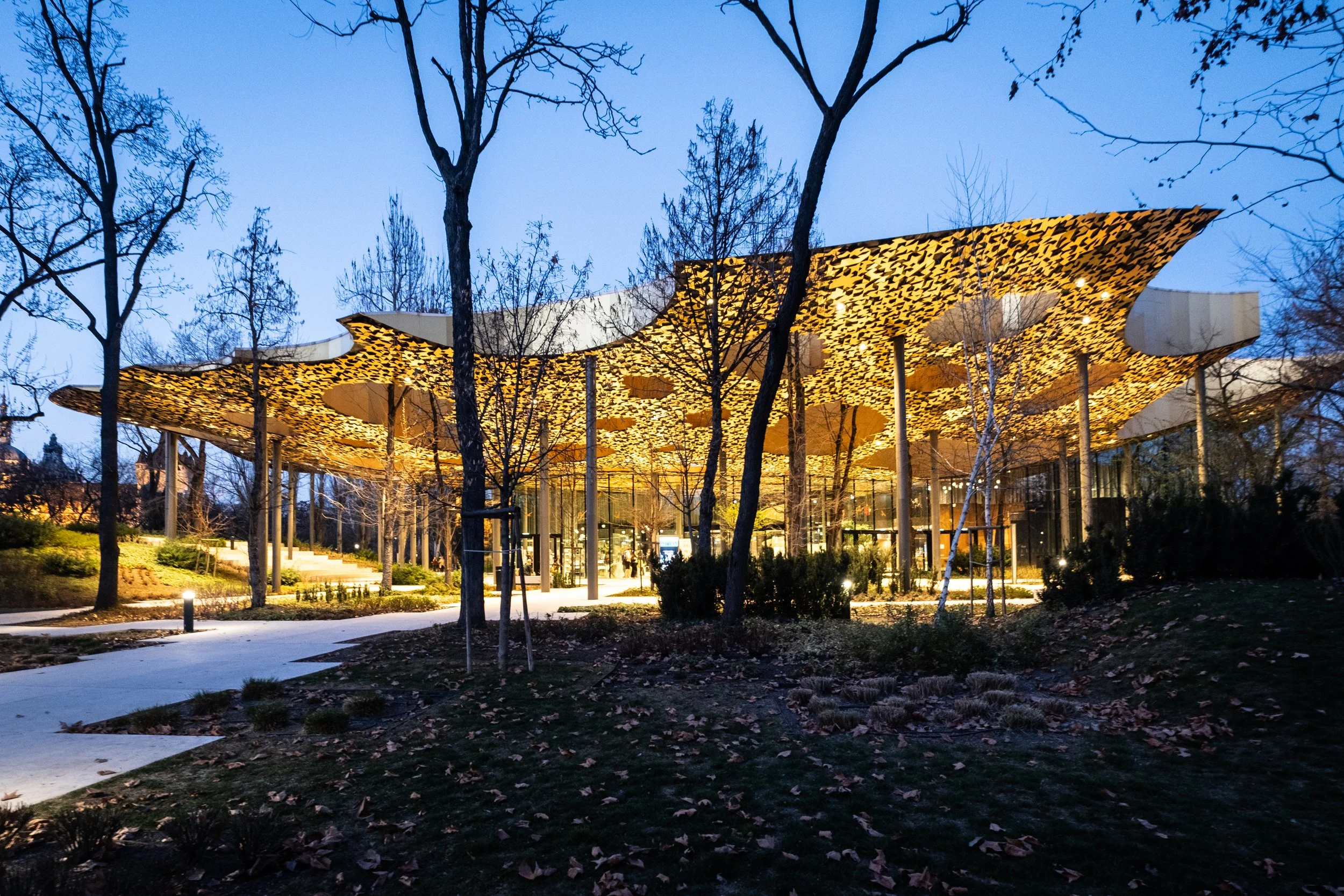
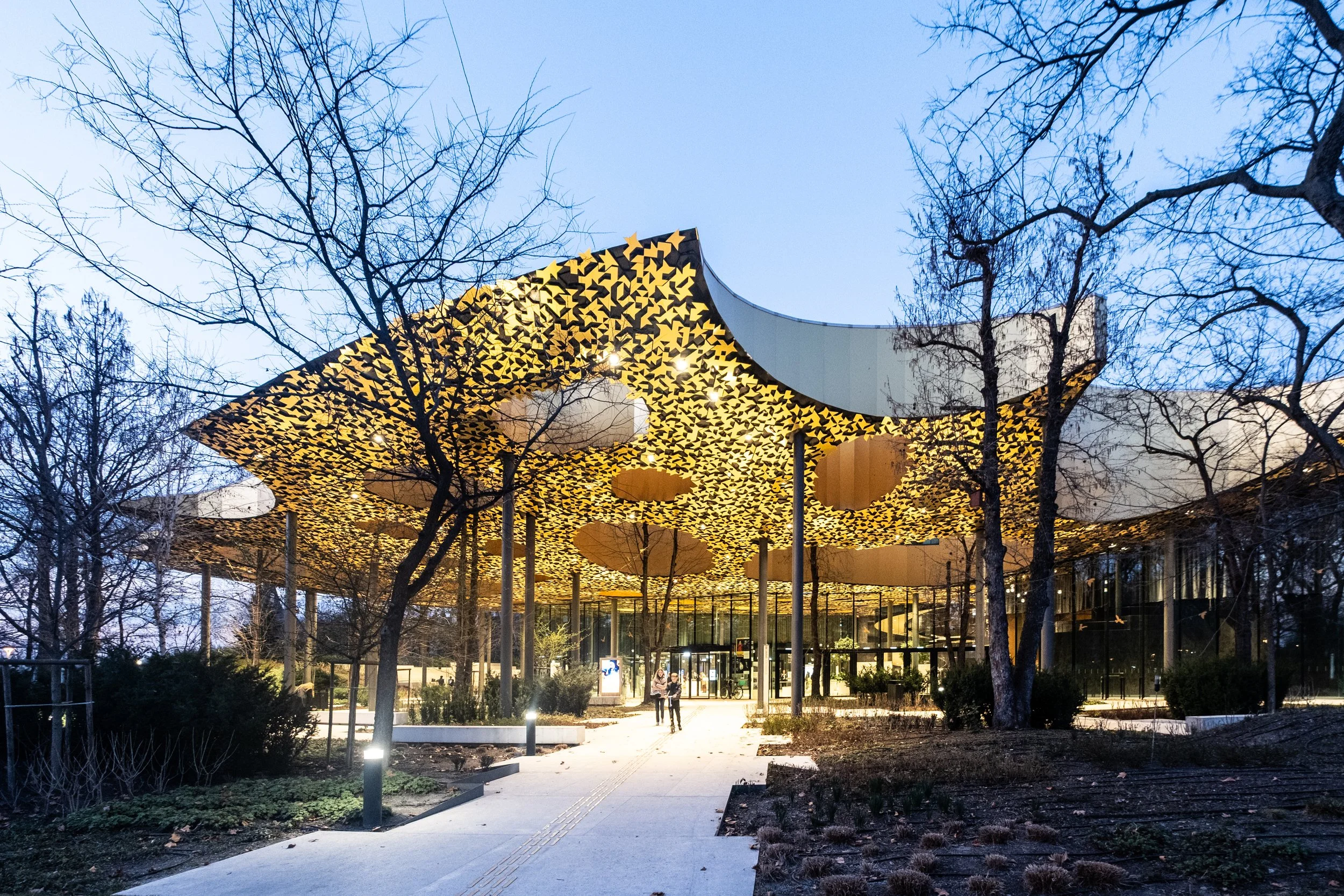
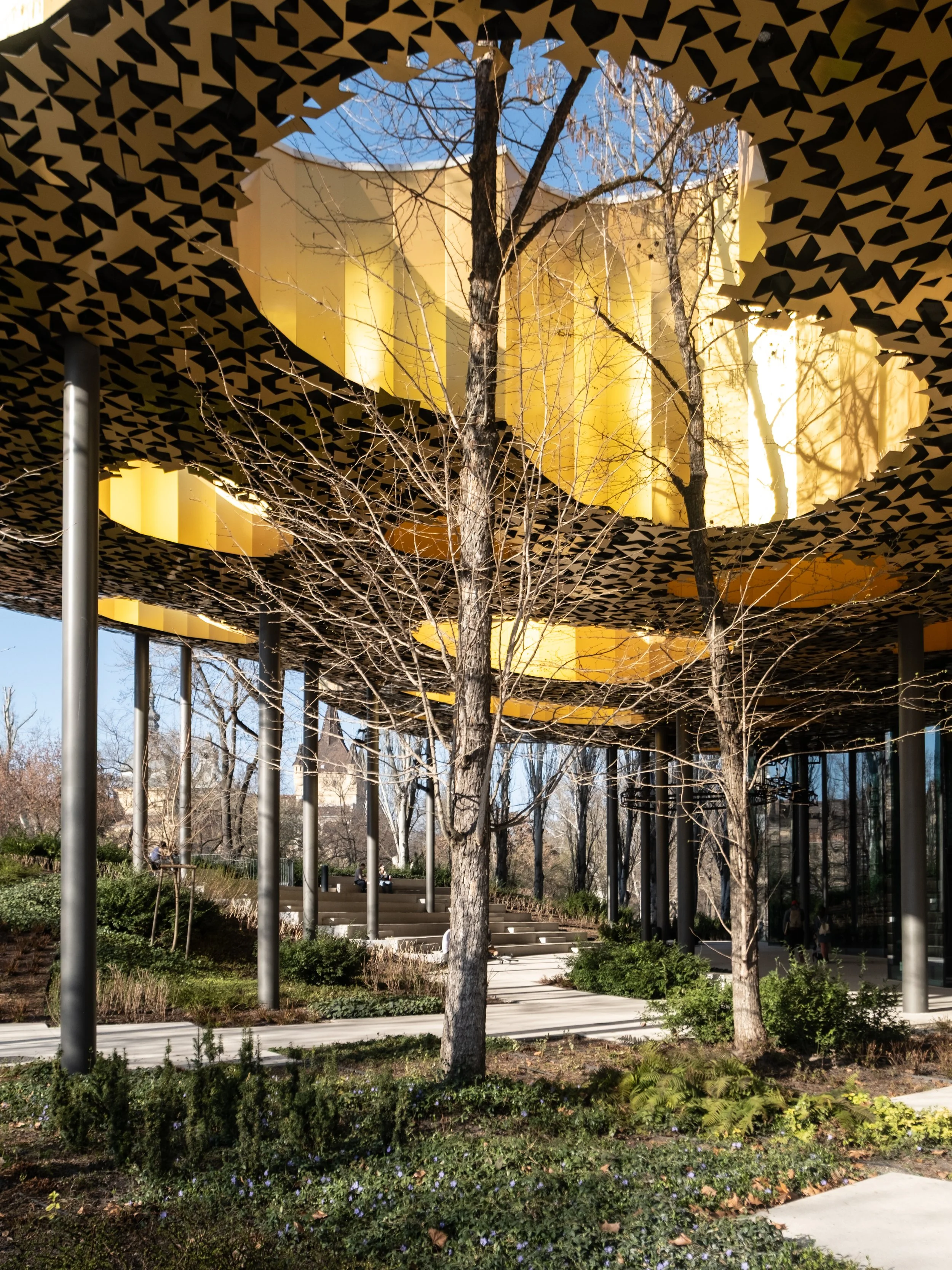
External view, House of Music Sou Fujimoto's building does something unusual — it refuses to announce itself. You're halfway through the park before you realize you're looking at a museum. Photo: Dan Hogman
I first encountered the work of Lina Ghotmeh—now a close collaborator—through her breakthrough project, the Estonian National Museum. At the time, I read the building primarily as a national gesture: Estonia reclaiming pride in its language, culture, and historical continuity after decades of Soviet rule. I admired it as a powerful but singular object.
Only later did it become clear that it was not a one-time effort at all. The museum was an early signal of a broader architectural condition unfolding across Central and Eastern Europe.
Over the past decade, a coordinated wave of museum construction has emerged across the post-Soviet landscape. These projects are not merely cultural infrastructure. They function as instruments through which states narrate history, reorganize collective memory, and reposition themselves within the cultural geography of Europe.
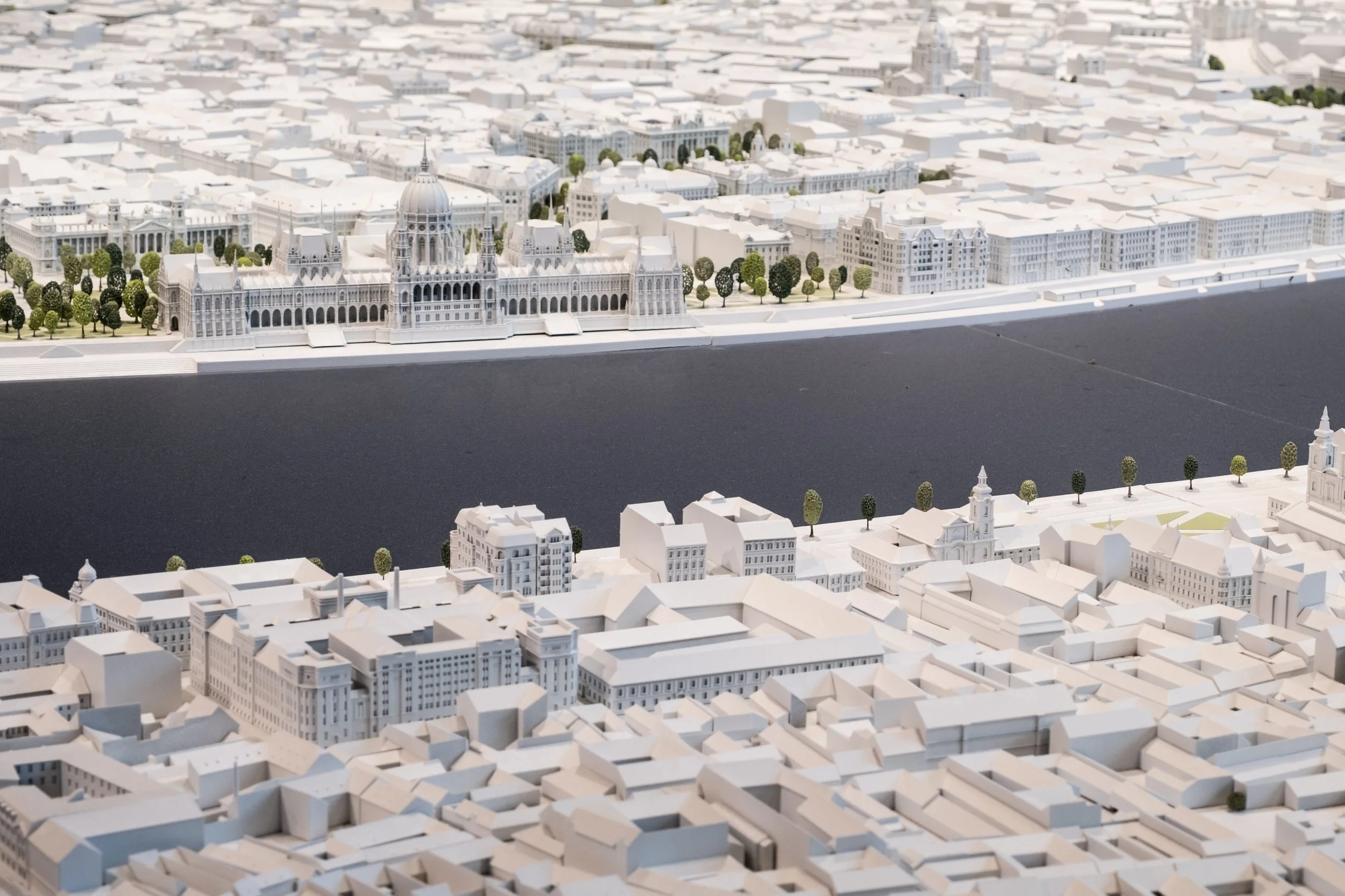
Two striking examples appeared almost simultaneously in Budapest in 2022, facing one another across Városliget.
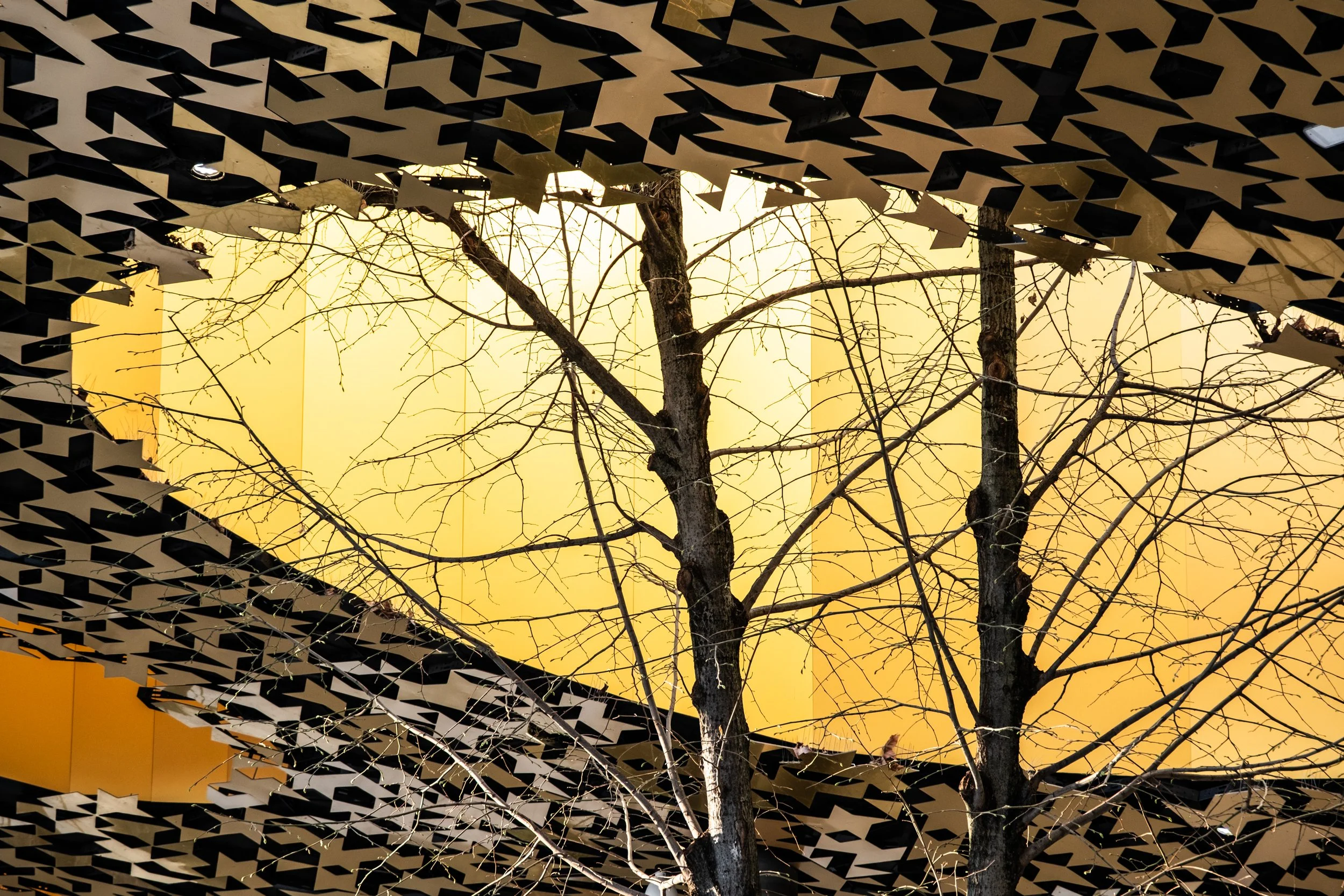
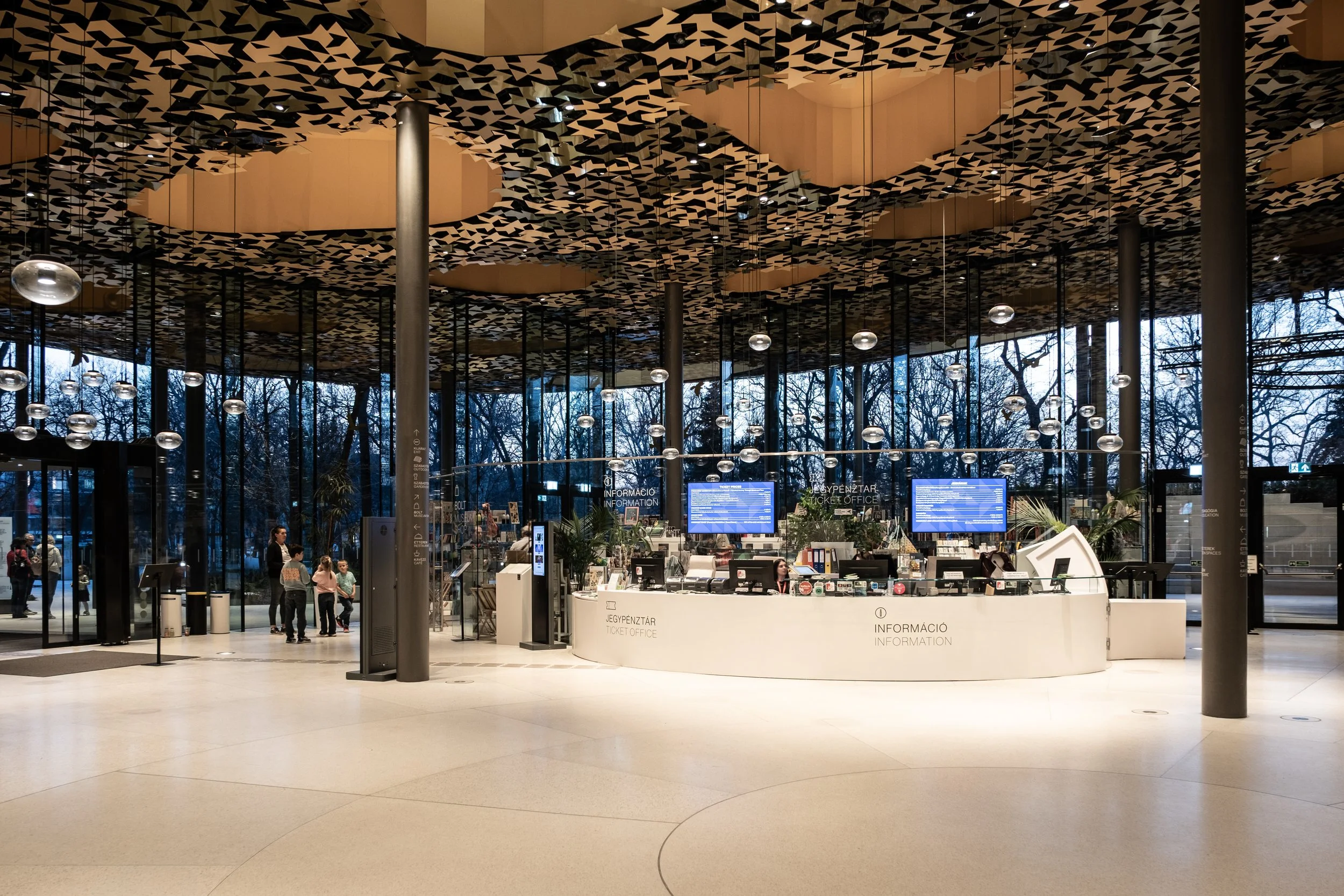
The House of Music Hungary was designed by Sou Fujimoto and opened in January 2022. Fujiomoto proposes a museum conceived less as a container for objects than as an architectural atmosphere. It presents itself as an almost alien form - a thin roof plane, perforated by roughly one hundred circular openings. The openings are the most striking features - they allow vegetation and daylight to penetrate the interior. In principle, the building dissolves the boundary between park and institution, presenting culture as porous rather than monumental.
Yet the project raises a familiar architectural question: when does gesture become substance?
Fujimoto’s attempt to merge nature and architecture occasionally slips toward spectacle. The celebrated ceiling—composed of tens of thousands of gold-toned elements—aims to evoke a musical atmosphere but risks drifting into decorative excess. At night, the palette of dark glass and golden interiors can give the building the character of a refined lounge rather than a civic cultural institution.
And indeed, it can simply function as a lounge. I returned several times during my stay in Budapest just for a beer and/or coffee. It’s the idea that a building can go beyond its initial meaning and do more for the people.
Here, its ambiguity is also its strength. Visitors drift in for coffee, concerts, exhibitions, or simply to pass through the park. The building functions less as a temple of culture than as an animated urban living room.
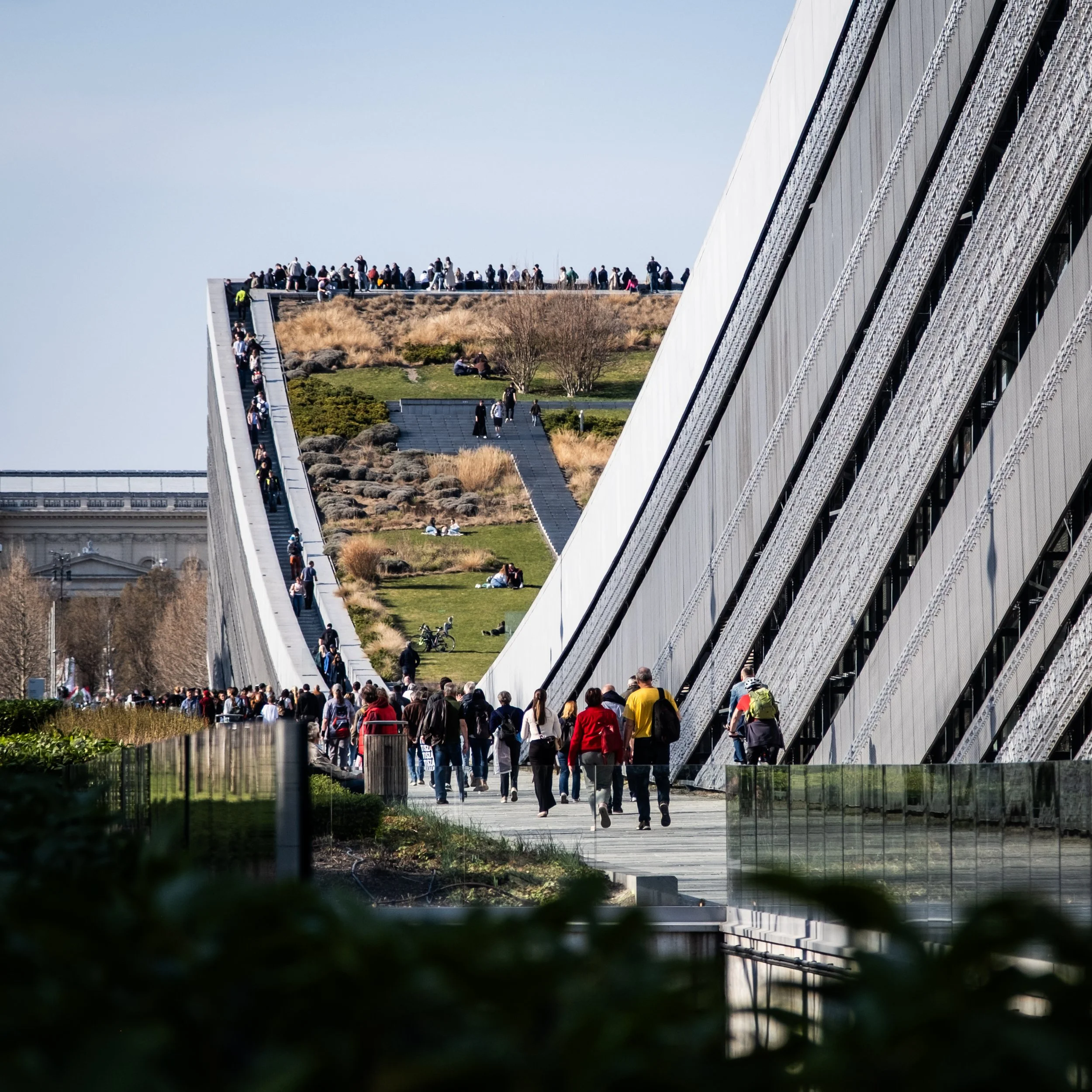
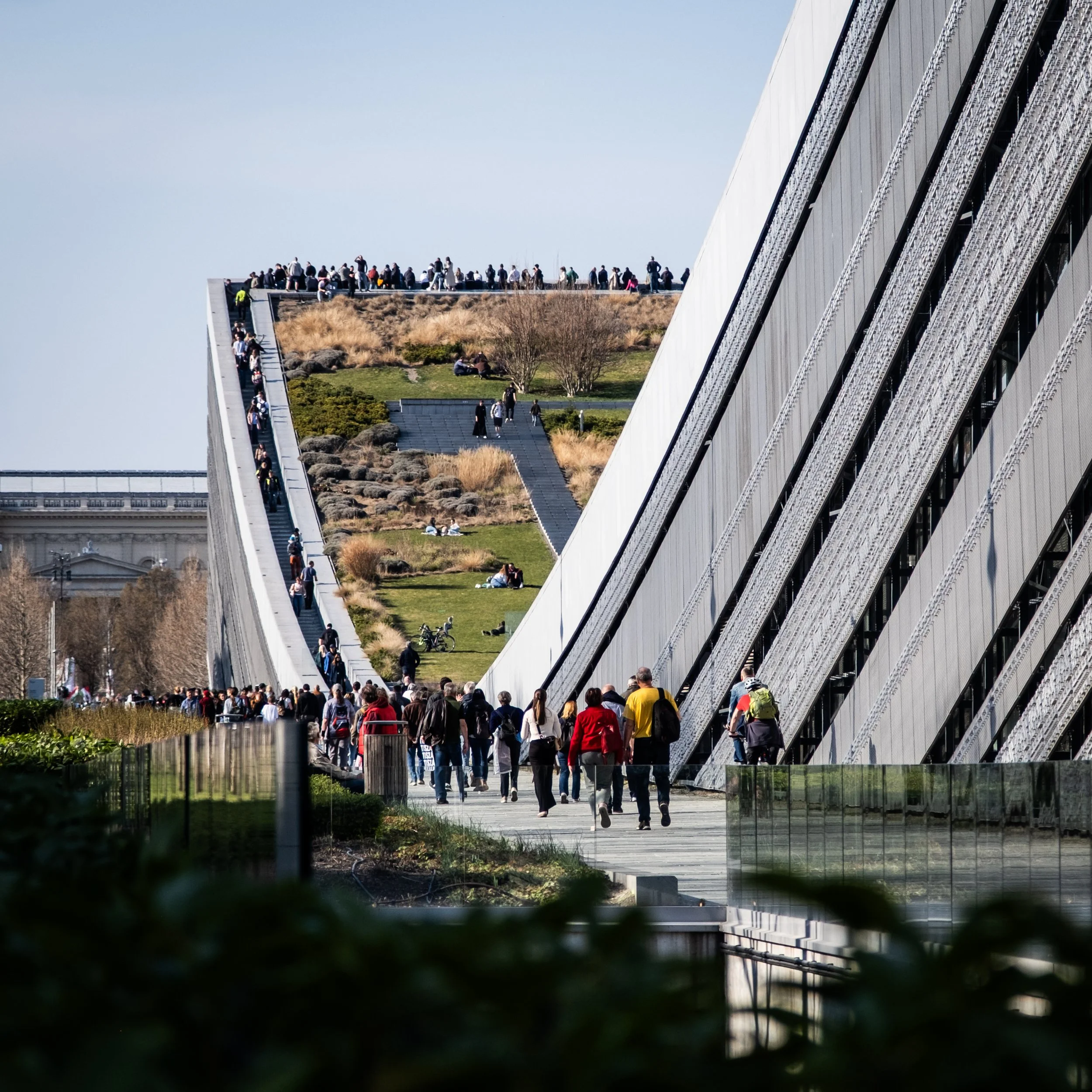
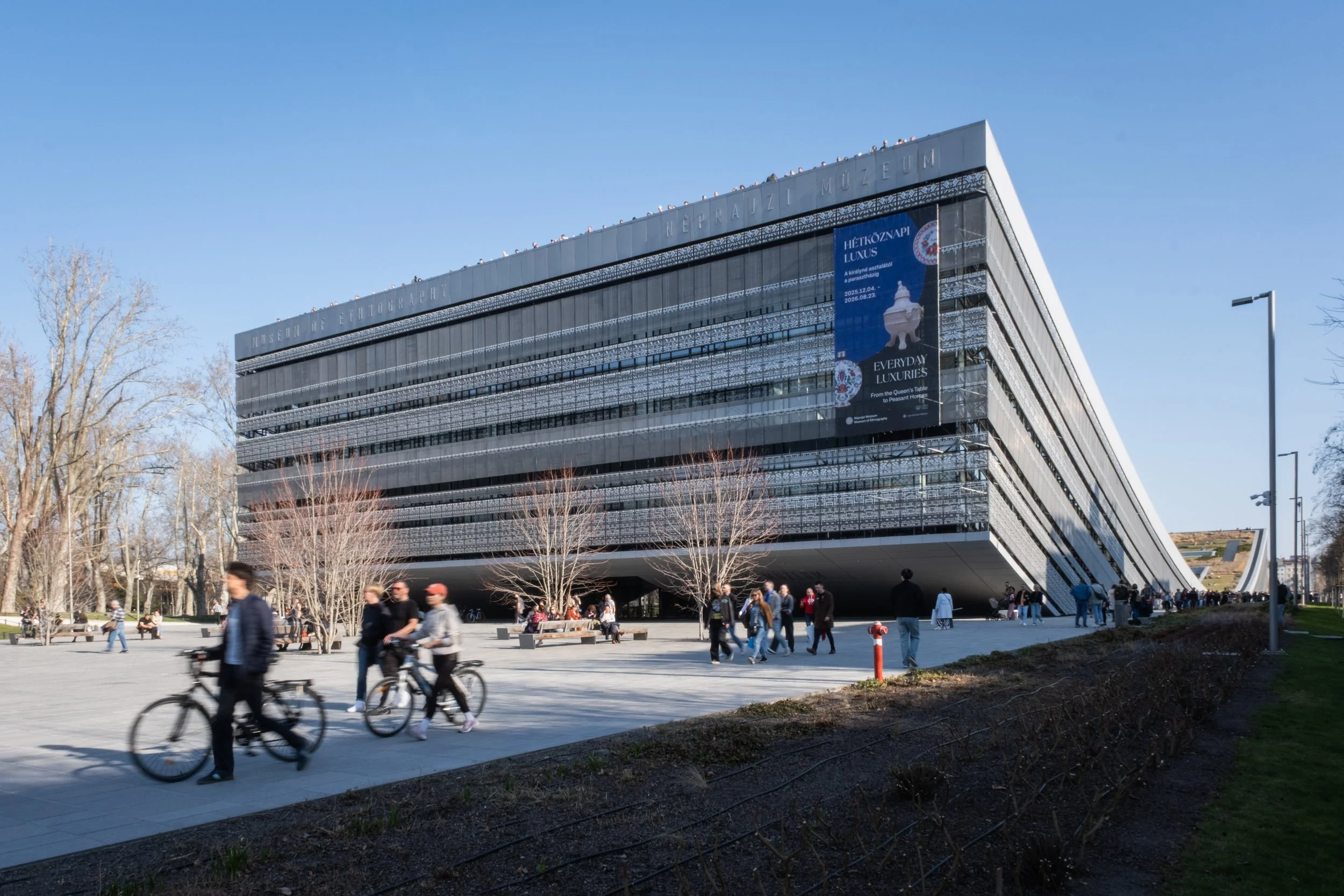
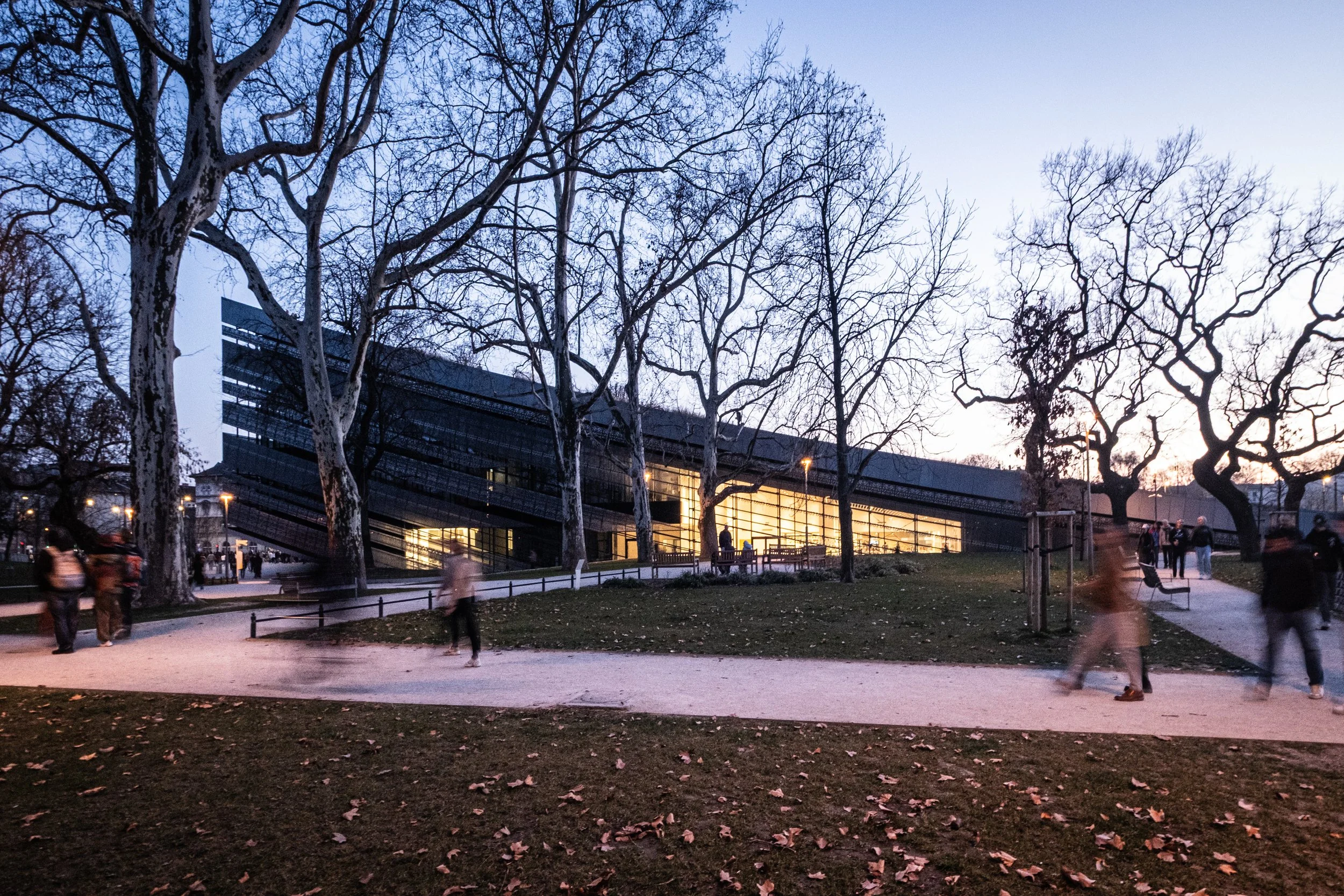
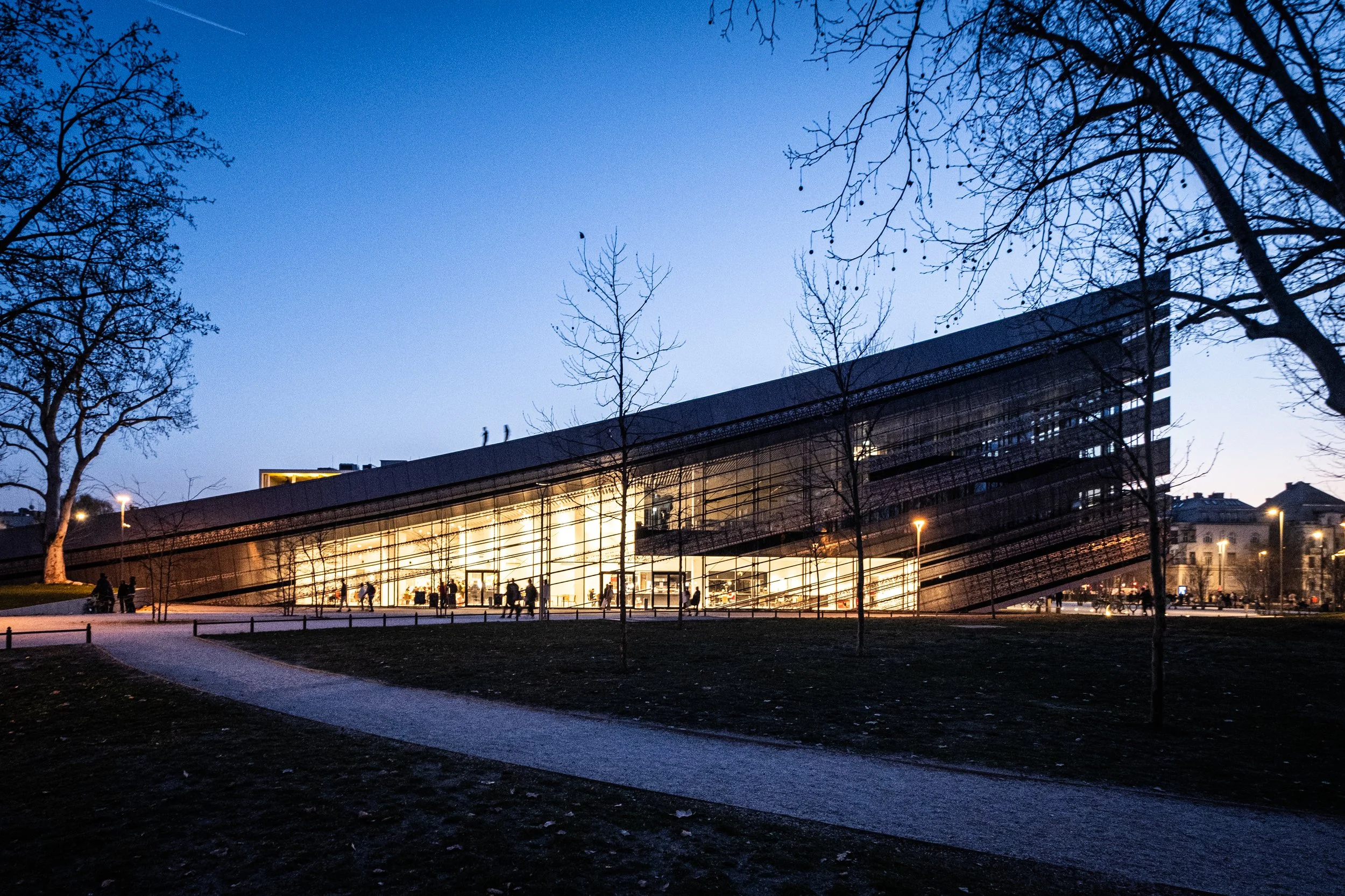
Across the park stands the Museum of Ethnography Budapest, 2022, by Marcel Ferencz of NAPUR Architect.
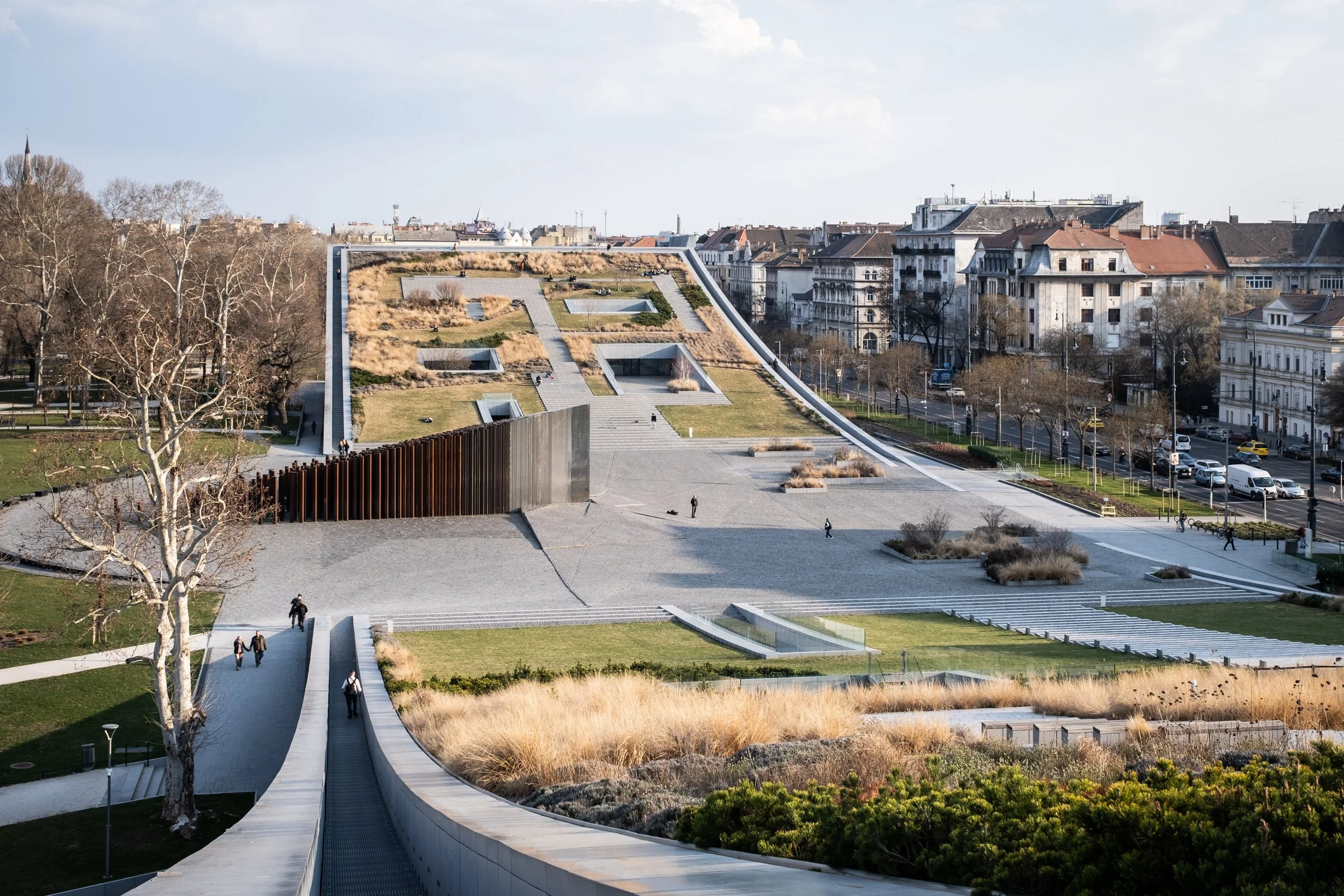
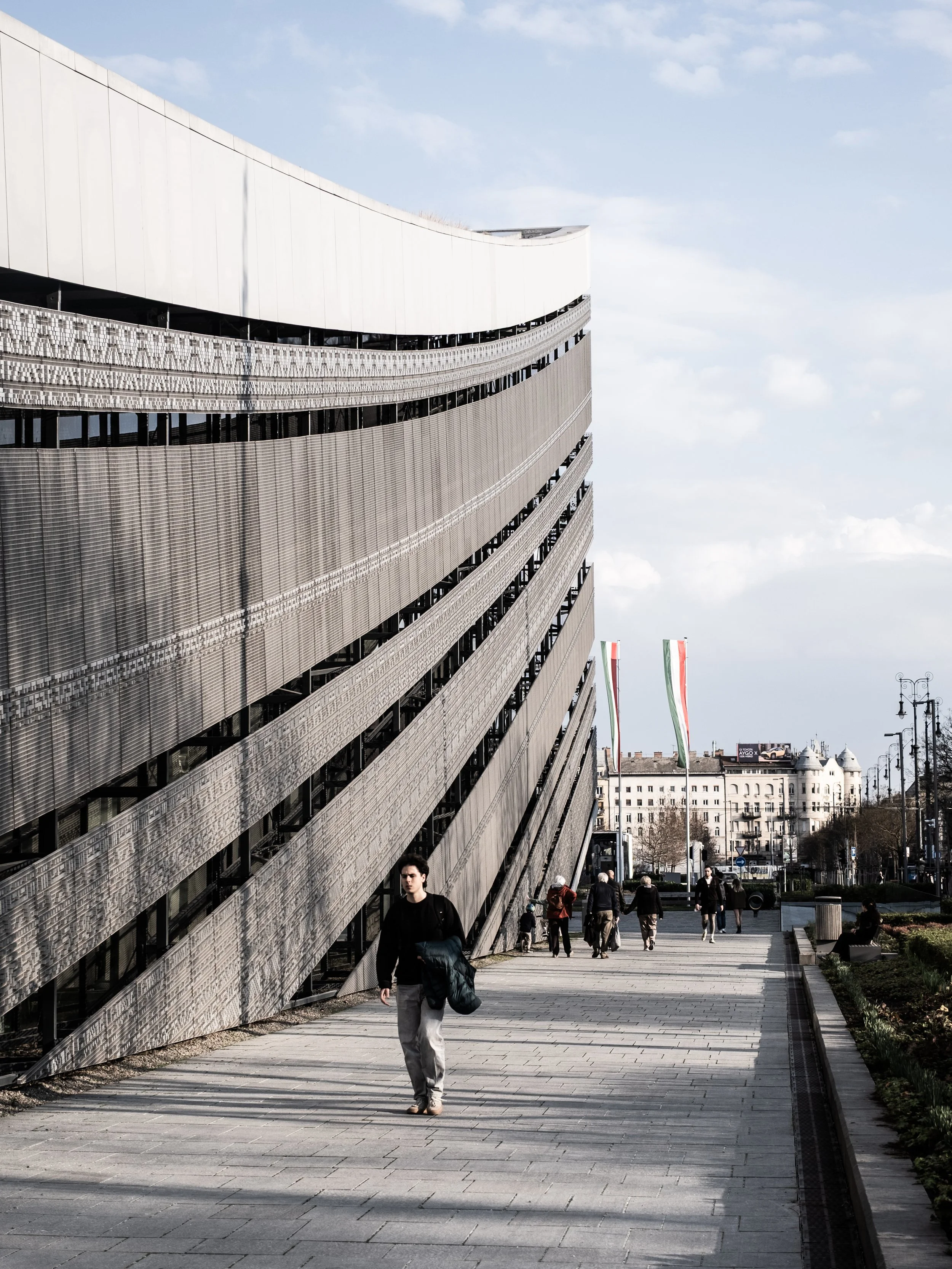
Where Fujimoto’s building dissolves into the landscape, this one attempts to reshape it. Two immense inclined planes rise from the ground like opposing hillsides, framing what the architects describe as a symbolic gateway to the park.
The gesture remains ambiguous. This is almost 250 meters in length, where the two ends barely read as one structure. To some, it presents itself less like a gateway than a monumental horizontal barrier.
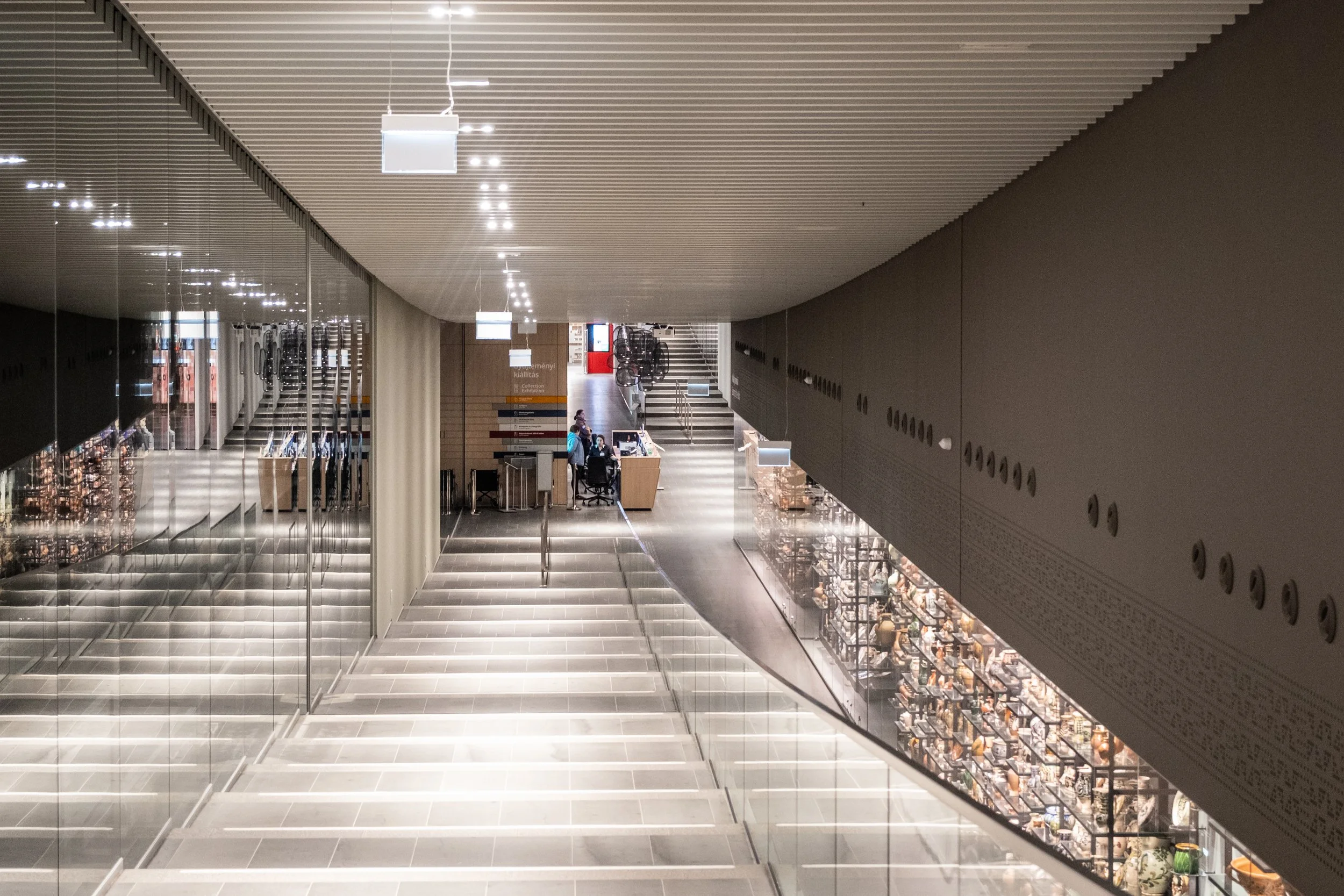
Still, it does not read like an overwhelming institutional mass. The form follows a rigid, downward arch structure, where the middle part is depressed at level zero, and circulation is buried underground. I am questioning if the effect is beneficial for the interior circulation, where level changes are needed to maintain continuity between the two ends.
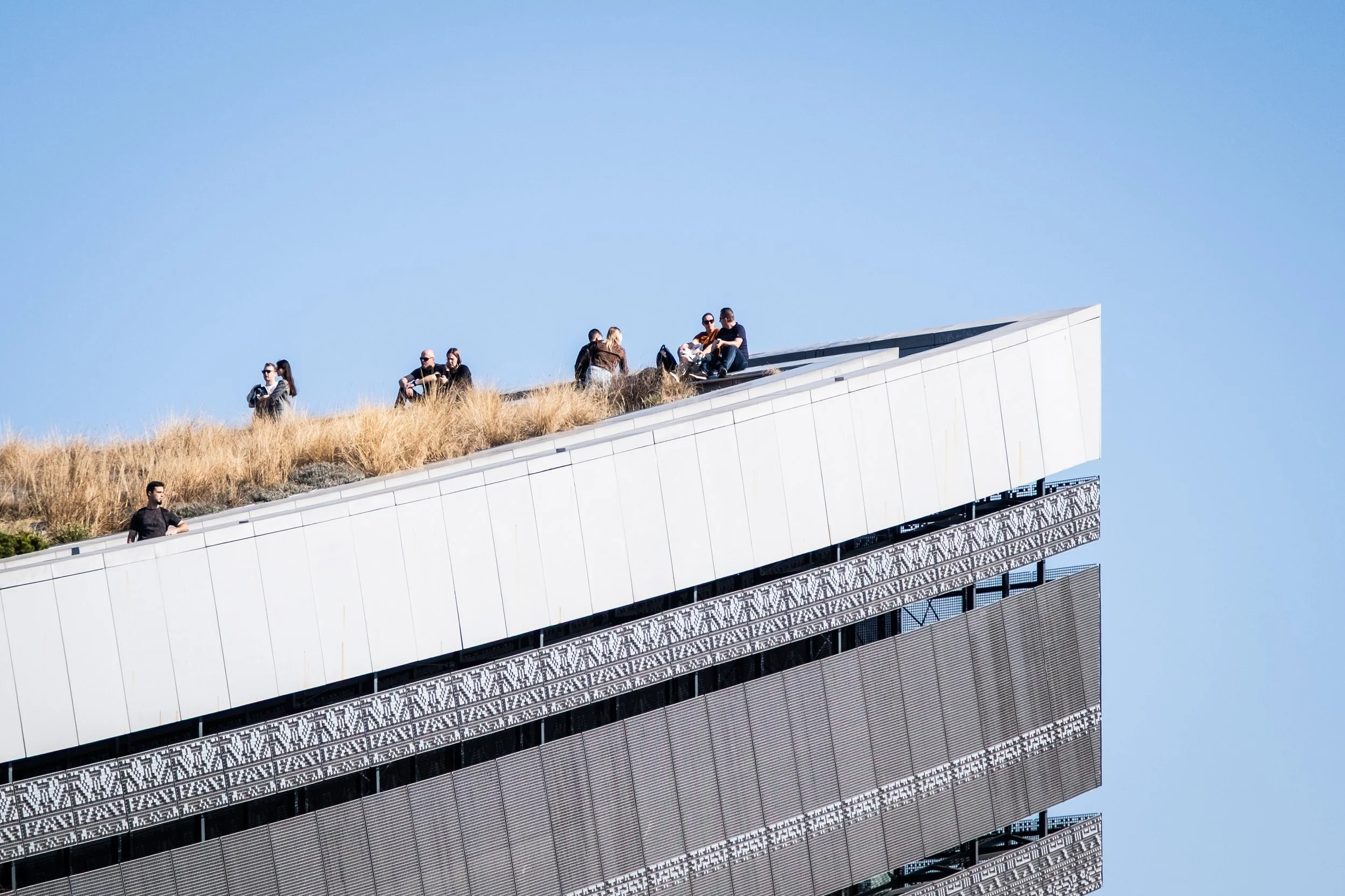
On the plus side, the reduced middle mass allows for access points to the roof garden - highly popular as viewing platforms over the park (photo). I spend quite a bit of time walking around the plazas at both ends of the building, as well as the one in the center, essentially a roof - it feels “grounded”.
The landscaped roof attempts to reconcile the building with its surroundings, presenting itself as a new artificial hill within the park. Yet the substitution remains uneasy—an engineered landscape replacing the spatial openness that once defined Városliget.
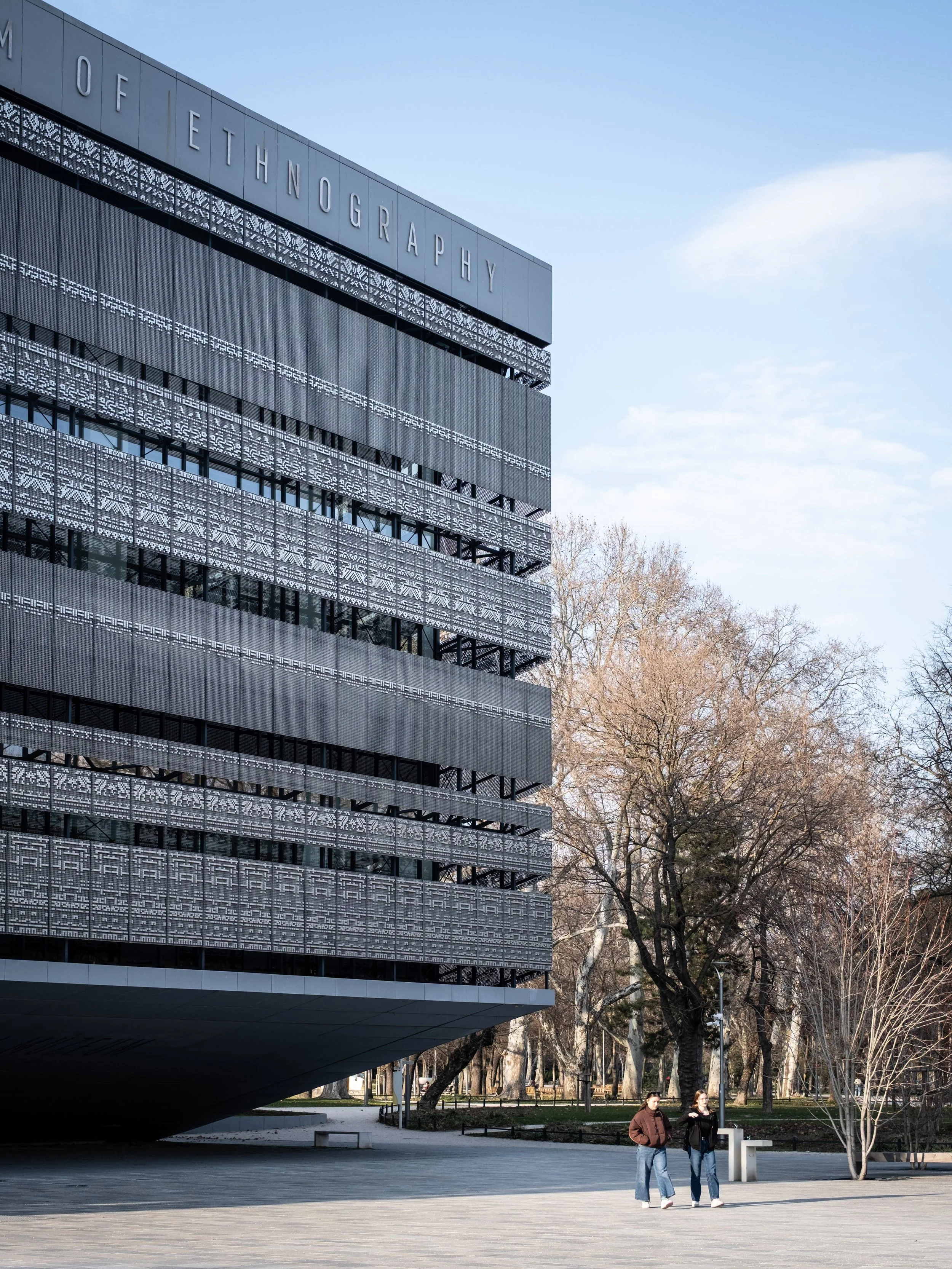
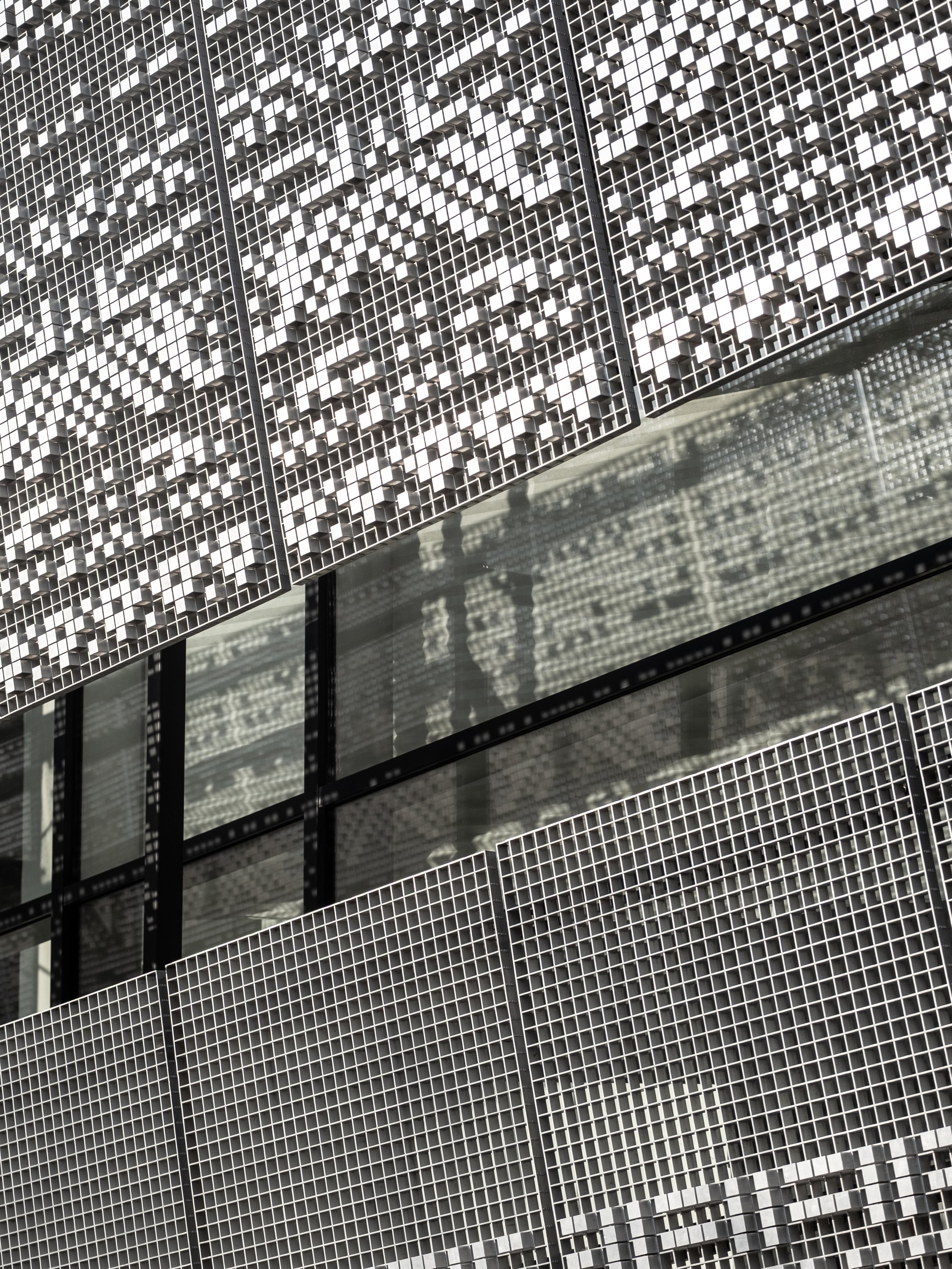
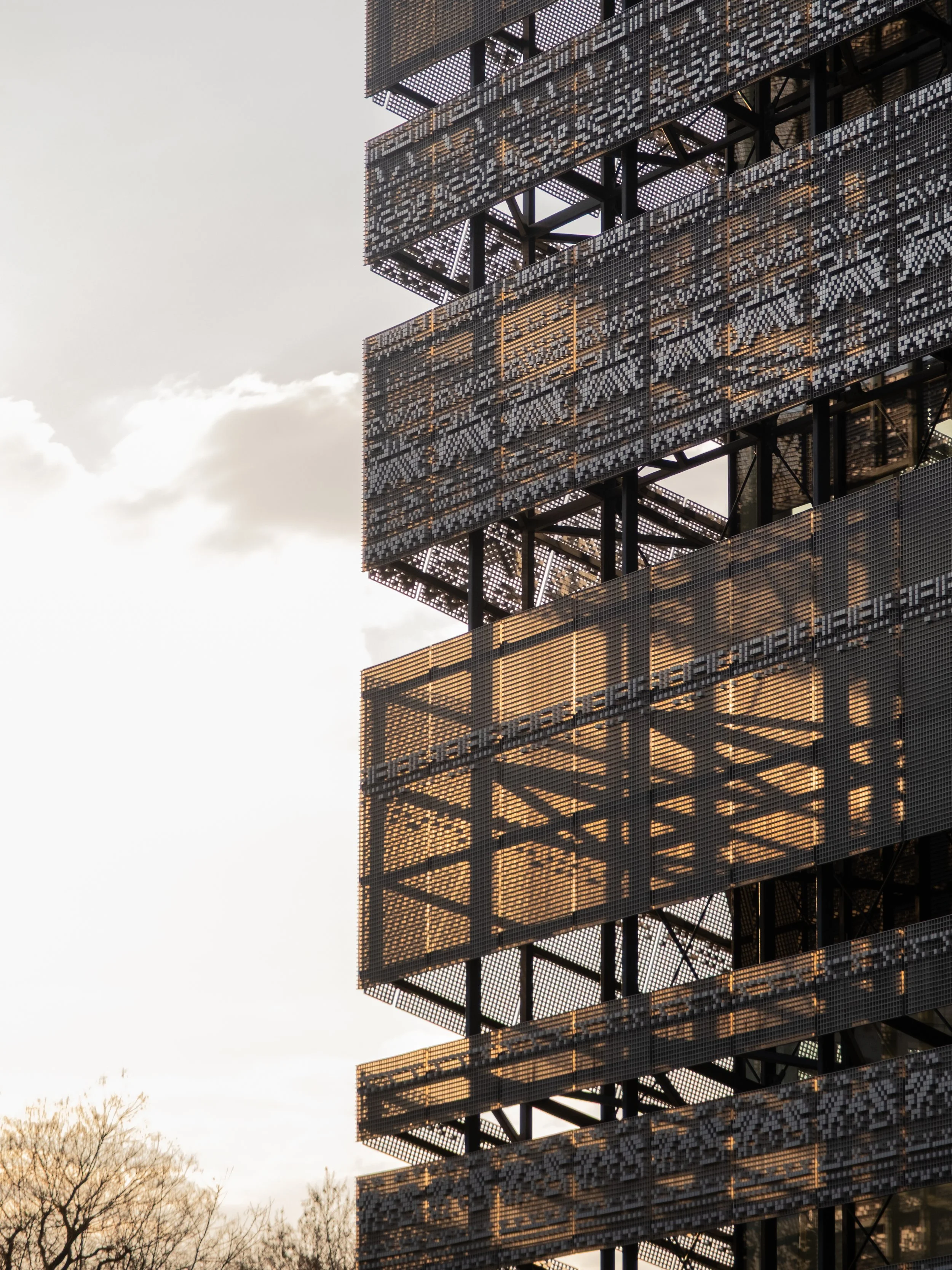
Its defining element is the vast metal façade composed of hundreds of thousands of laser-cut motifs derived from Hungarian ethnographic patterns. The intention is to translate folk ornament into contemporary architecture. The result can feel closer to a digital screen than to a living cultural language.
—
Further north, Warsaw recently added another element to this evolving cultural geography: the Museum of Modern Art in Warsaw, completed in 2024 by Thomas Phifer - a building that I have yet to see…
In contrast to Budapest’s expressive forms, this building adopts radical restraint. The main volume is luminous and defined by clarity and light - it stands deliberately opposite the nearby Palace of Culture and Science, the monumental Soviet tower that still dominates the city’s skyline. The juxtaposition is unmistakably political: a quiet architectural counter-statement to a historical symbol of imposed power.
—
A particularly layered case appears in Riga with the Museum of the Occupation of Latvia, reopened in 2022 after a major expansion. The original structure dates from the Soviet period and once housed a propaganda museum celebrating Lenin. After independence, it was transformed into an institution documenting both Nazi and Soviet occupation.
The recent addition—the “House of the Future”—introduces a stark white annex that contrasts sharply with the dark concrete original. The architecture stages a symbolic narrative: movement from historical darkness toward clarity.
—
The next chapter of this transformation is already underway. Not reying to be fully comprehensive here, but worth mentioning at least one that I am particularly looking forward to — the Hungarian Natural History Museum Debrecen, by Bjarke Ingels, expected around 2030.
The project consists of three overlapping timber ribbons rising from a forested landscape. Yes, you will get the usual one-line solution, and/or the usual tectonic shifts - it is partially embedded in the terrain, merges architecture with topography while offering a publicly accessible roofscape. The project also reflects a political ambition: redistributing cultural investment beyond Budapest. There is quite a lot to criticize regarding BIG’s work, but looking beyond this, it’s interesting to see world-class design extending beyond national capitals.
-
Taken together, these buildings reveal a clear regional pattern. Across Estonia, Hungary, Poland, Latvia, and beyond, governments have commissioned ambitious museums designed by internationally recognized architects.
These institutions perform multiple roles simultaneously: confronting the legacies of communism, asserting national narratives, attracting cultural tourism, and demonstrating participation in European cultural networks.
But the architecture reveals something deeper - the museum boom across Central and Eastern Europe represents a form of architectural statecraft.
Through museums, governments are not merely preserving culture—they are constructing national identity in the public realm. The museum building is uniquely suited to this task: permanent, publicly funded, symbolically legible, and internationally visible.
What we are witnessing is therefore not simply a cultural trend but a spatial strategy—states translating historical memory and political ambition into built form.
Why Now
Several forces converged during the 2010s.
European Union structural funds made large cultural infrastructure projects financially viable on a scale unimaginable during the fragile post-communist transition of the 1990s. At the same time, a new political generation emerged—less preoccupied with economic survival, given the stability that comes with these countries being members of both the EU and NATO, and increasingly focused on cultural consolidation.
Meanwhile, international architects began competing seriously for projects in the region, bringing global attention to commissions that might previously have remained local.
Political will, financial capacity, and architectural ambition aligned.
The Tension
What makes this phenomenon particularly compelling is the contradiction embedded within it.
These museums project openness: international architects, global audiences, and cosmopolitan programming. Yet many simultaneously serve strong national narratives.
The controversy surrounding the Museum of the Second World War in Gdańsk illustrates this tension clearly. It was originally conceived as an international museum of wartime suffering. It later became the focus of political pressure to foreground specifically Polish historical experience. Budapest’s Liget project reflects a similar dynamic. International architectural prestige—Sou Fujimoto, among others—is mobilized in the service of institutions celebrating national cultural identity.
Openness and nationalism coexist, but not without friction.
Historical Echoes
This moment echoes earlier periods when nations invested heavily in cultural institutions following political transformation.
After German reunification in 1989, Berlin experienced a major museum-building boom. During Ireland’s economic expansion in the 1990s, cultural infrastructure grew rapidly. Even earlier, nineteenth-century Europe saw newly independent states construct grand museums to legitimize their nationhood.
The post-Soviet museum wave can be understood as a contemporary version of that impulse: architecture used to assert cultural continuity and political authorship.
Returning to Ghotmeh
Seen in retrospect, the Estonian National Museum appears less like an isolated architectural achievement than an early articulation of the transformation now unfolding across the region.
What would be a more evocative setting than this - the building extends from a former Soviet airfield as a long rising plane, with a sloping roofline continuing the geometry of the runway itself. This is an architectural gesture that transforms a landscape once defined by military occupation into a trajectory of cultural continuity. Poetry!
What distinguishes the project is the clarity with which architecture translates history into spatial form. The building does not simply contain a national narrative; it physically stages the passage from rupture to renewal.
In that sense, it anticipated the broader museum wave now visible across Central and Eastern Europe. From Budapest to Warsaw to Riga, these institutions operate as architectural frameworks through which societies renegotiate their relationship with the past while projecting new cultural identities outward.
The museum building—public, permanent, and symbolically legible—has become the preferred medium for this process.
The Estonian National Museum was therefore not only a building about Estonia. It was an early architectural expression of a wider historical moment: a region using architecture to reclaim authorship over its own cultural narrative.
—
Side view and roof garden, Museum of Ethnography. The top of the building somehow works. Both as a viewing platform and as a roof garden. From up there, the argument about whether this structure belongs in the park feels a little beside the point.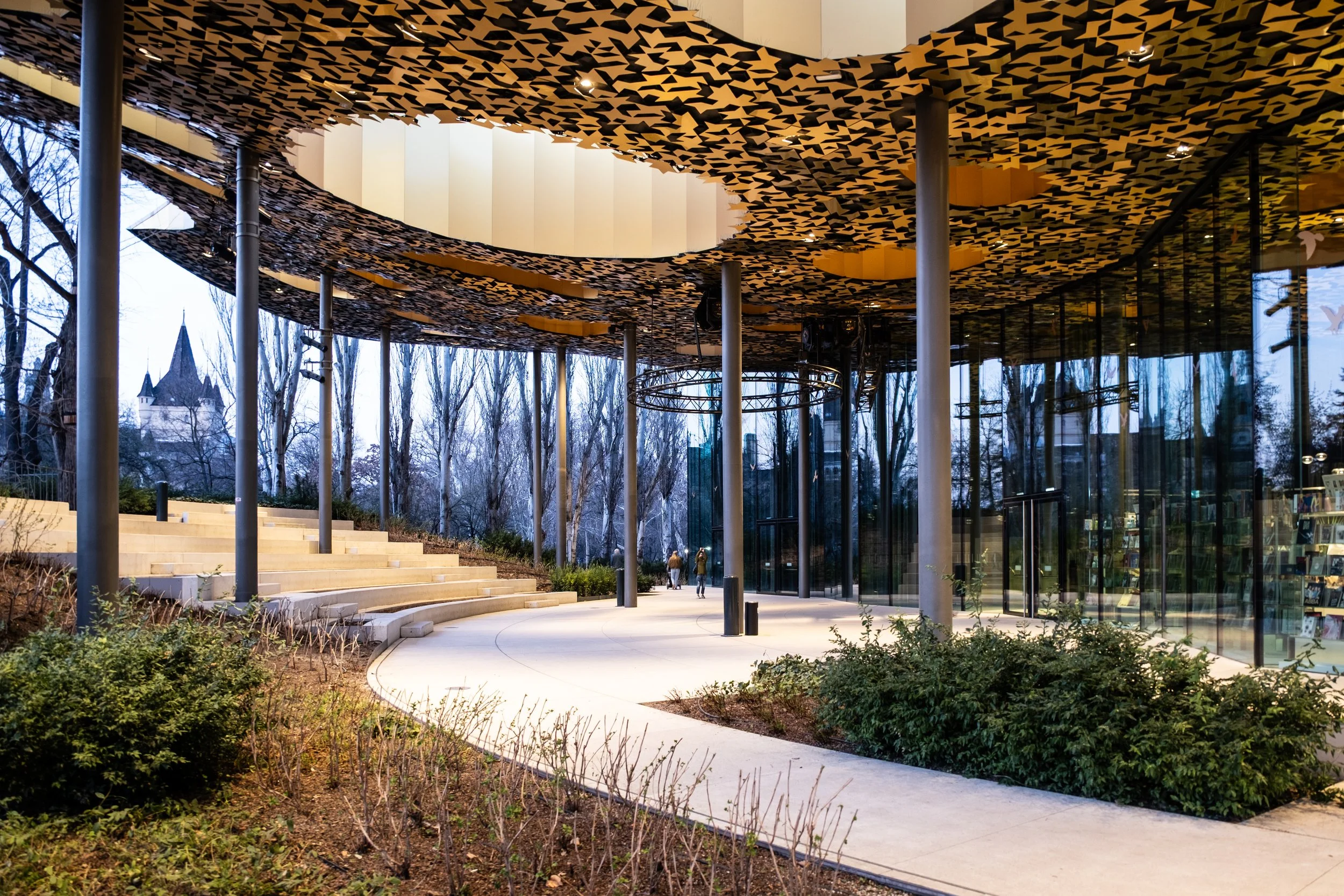
Outdoor amphitheatre, House of Music. On the day I visited this was empty. I suspect on the right evening it's one of the better places to be in Budapest.
More Images
House of Music. Budapest
More Images
Museum of Ethnography. Budapest